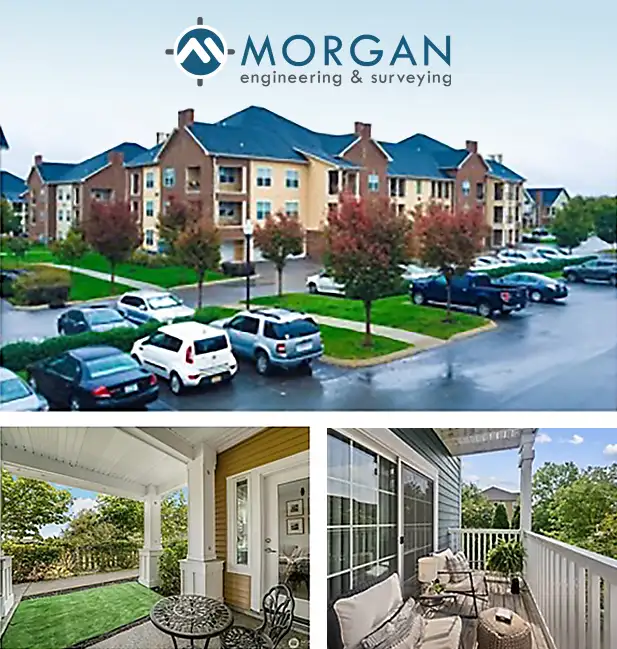
Do You Need A “Condominium Survey Certificate”?

Buying a condominium is an exciting milestone, but before you sign your closing documents, it is important what you are purchasing is precisely defined.

When you buy a condominium, you are not simply buying a physical space — you are purchasing a legally defined interest within real property. Unlike a traditional home purchase where you own the entire parcel, a condominium purchase involves ownership of a specific unit within a larger property governed by recorded condominium documents.

A condominium survey certificate—often referred to as a strata or condo survey—is a vital, specialized document created by a licensed land surveyor.

Define Legal Boundaries: Pinpoints the exact three-dimensional limits of your unit, including air space, storage units, parking stalls, limited common elements, and more.

A Condominium Survey Certificate provides confidence that the unit being transferred matches the recorded condominium plan and master deed.

  1. Protect Against Encroachments: Uncovers unauthorized additions or structural modifications made by previous owners that intrude into shared HOA areas.
  2. Lender and Title Insurance Document Requirements:
    • The correct unit number and location
    • The unit’s legal-defined interest in the property
    • That the unit corresponds with the recorded condominium documents
    • The location of assigned limited common elements, such as parking spaces, storage areas, patios, or other designated areas
    • Any potential discrepancies between recorded documents
  3. Dispute Resolution with the HOA: Provides legally binding documentation to settle disagreements with neighbors or the condo board regarding maintenance responsibilities and shared spaces.
  4. Smooth Resale and Property Valuation: Protects your investment and simplifies future sales by offering prospective buyers verified, transparent documentation of the property’s footprint.

Morgan Engineering provides accurate and reliable condominium survey services to help buyers, lenders, attorneys, and title professionals move forward with confidence. Contact us today.

By making a survey certificate a standard step in your closing process, you safeguard your real estate investment and ensure that your home remains a source of comfort rather than conflict.

Morgan Engineering: SURVEYING the TOMS RIVER

Morgan Engineering Survey Team Uses USV Technology to Elevate Waterway Surveying

Instead of putting a large crewed boat into shallow or tricky stretches of water, this remote-controlled vessel glides seamlessly across the surface while collecting continuous data. The compact size of a USV (Unmanned Surface Vessel) allows Morgan Engineering to access tight spots along the shoreline, bulkheads, and shallow spots that traditional boats can’t reach, ensuring the survey covers every necessary square foot without disturbing local marine traffic or habitats.

Bridging Land and Water to Define Property Boundaries

Mapping waterfront property lines presents a unique challenge, as traditional land surveys stop right where the water begins. To accurately locate property boundaries that extend toward or into the water for a client in Toms River, New Jersey, the Morgan Engineering survey team combined land-based positioning with advanced hydrographic tools. Using RTK-GPS (Real-Time Kinematic GPS) for centimeter-level accuracy, the team deployed a USV to perform bathymetric mapping (“soundings”) along the riverbed. By seamlessly tying underwater topography and depth measurements back to the client’s terrestrial property markers, Morgan Engineering delivered a precise, complete boundary profile—ensuring the client knows exactly where their property lines rest on both land and water.

WATCH Morgan Engineering’s Survey Team on the Toms River

Pinpoint Precision with RTK-GPS Integration

What makes this bathymetric survey stand out is the integration of RTK-GPS technology. While standard GPS can have a margin of error of several feet, RTK-GPS uses land-based reference stations to correct satellite positioning in real time, locking down coordinates to centimeter-level accuracy. By pairing this pinpoint location data with the depth readings gathered by the USV, Morgan Engineering can produce pinpoint accuracy of its client’s property lines AND high-resolution 3D models of the Toms River floor – delivering the precise elevation data required for coastal infrastructure, dredging projects, and environmental planning.

If you have wetlands or waterway that needs to be measured in any form, contact Morgan Engineering LLC and its Survey Team today.


Seaside Heights’ Bamboo Bar – Now “Bamboo Lofts”

Seaside Heights, NJ: The Bamboo Bar is to become “Bamboo Lofts.”

Morgan Engineering’s head of engineering services, Mat Wilder, helped fellow developers, designers, investors navigate some five (5) years of planning development and secured approvals for all in June 2026.

VIDEO: Mayor Dr. Anthony Vaz, Morgan Engineering Mat Wilder, architect Jason Hanrahan

Civil Restoration Engineering: Science and History

Restoration Engineers operate at the intersection of engineering, science, and history – often serving as consultants to architects, construction professionals, and property owners.

It is a specialized discipline that focuses on diagnosing, repairing, and rehabilitating existing structures and/or degraded ecosystems, returning them to a functional, safe, and/or natural state. Projects most frequently include assessing damage from age, decay, environmental disasters, or human activities.

INDUSTRY TRENDS

Advanced Materials and Self-Healing Systems

The development of self-healing concrete has emerged as a cornerstone of sustainable restoration, utilizing autogenous, biogenic, and chemical mechanisms to repair micro-cracks without human intervention (Jose, 2026). Biogenic healing, in particular, employs bacteria embedded in the concrete matrix that activate upon contact with water, producing calcium carbonate to seal fissures (Jose, 2026). Beyond concrete, the use of Fiber-Reinforced Polymers (FRPs) and shape-memory alloys has gained traction for seismic retrofitting, offering high-strength and ductile alternatives to traditional steel and timber (Tiza et al., 2024). These materials not only extend the lifespan of existing structures but also reduce the carbon footprint associated with frequent maintenance (Tiza et al., 2024).

Ecohydraulics and Nature-Based Solutions

In the realm of water and coastal infrastructure, restoration is increasingly guided by ecohydraulics, a field that bridges hydraulic engineering with ecological outcomes (Baki, 2025). Recent studies highlight the use of nature-based solutions, such as instream boulders to create turbulent-flow habitats and vegetation to stabilize riverbanks affected by sediment mining (Baki, 2025). These interventions are designed to restore biodiversity and habitat connectivity while providing functional services like coastal wave attenuation and flood risk reduction (Baki, 2025). By mimicking natural processes, engineers can create more robust systems that align with global ecosystem restoration goals (Baki, 2025).

Mantoloking Bridge, NJ (County Route 528), spanning Barnegat Bay, Ocean County, NJ

Digital Twins and AI-Driven Monitoring

Think breaking points in a structure. The integration of Digital Twin (DT) technology and Artificial Intelligence (AI) is revolutionizing structural health monitoring (SHM). A Digital Twin serves as a dynamic, data-driven replica of a physical asset, allowing for real-time monitoring and predictive maintenance (Scolamiero, 2026). By combining IoT sensors, drone imagery, and AI algorithms, engineers can detect minute structural deterioration or corrosion early in their development (Alshaikh, 2025). Recent frameworks have successfully applied these technologies to complex assets like dams and urban road networks, moving the industry toward “predictive intervention” rather than reactionary repair (Singh et al., 2026; Scolamiero, 2026).

Ultra-high Performance Concrete (UHPC). Photo compliments of Rutgers CAIT

Sustainable Cementitious Composites

Recent breakthroughs in Engineered Cementitious Composites (ECC) focus on replacing traditional components with sustainable alternatives like quarry dust and supplementary cementitious materials such as fly ash and silica fume (George, 2026).

These high-performance repair mortars exhibit superior ductility and crack-width control, making them ideal for rehabilitation in aggressive environmental conditions (George, 2026). Research published in 2026 underscores that these modified ECC mixes significantly reduce primary raw material extraction and environmental ecotoxicity while maintaining the mechanical integrity required for structural restoration (George, 2026).

For decades, Morgan Engineering has been operating in restoration engineering and helping commercial and residential clients efficiently achieve pre-damage condition and prepare for the future. If you have a structural issue that may constitute restoration engineering, please contact Morgan Engineering & Surveying today as we may be able to assist.

References

  • Alshaikh, I. M. H. (2025). Pioneering the future: AI’s impact on civil engineering research. Advances in Structural Engineering, 28(9), 1515–1541.
  • Baki, A. B. M. (2025). Guest Edited Collection: “Ecohydraulics” in river and coastal restoration. Scientific Reports.
  • George, M. (2026). Life cycle assessment and structural evaluation of sustainable and cost effective engineered cementitious composite (ECC) repair mortars. Frontiers in Built Environment.
  • Jose, A. S. (2026). Advancements and Applications of Self-Healing Concrete for Sustainable Infrastructure. EPJ Web of Conferences.
  • Scolamiero, V. (2026). A BIM-Based Digital Twin Framework for Urban Roads: Integrating MMS and Municipal Geospatial Data for AI-Ready Urban Infrastructure Management. Remote Sensing.
  • Singh, P., Ge, L., Sankar, G., & Sadhu, A. (2026). Digital Twinning Framework for Advanced Remote Dam Monitoring using Internet-of-Things. Canadian Journal of Civil Engineering.
  • Tiza, M. T., Imoni, S., Akande, E. O., Mogbo, O., Jiya, V. H., & Onuzulike, C. (2024). Revolutionizing Infrastructure Development: Exploring Cutting-Edge Advances in Civil Engineering Materials. Recent Progress in Materials, 6(3), 1-68. https://doi.org/10.21926/rpm.2403023

Roof Collapse Creates Opportunity for Jersey Shore Area American Legion

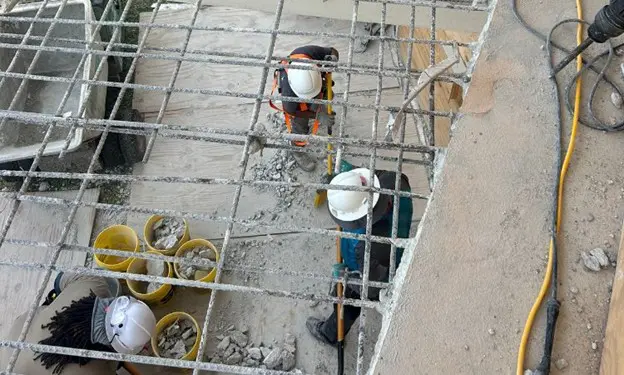
Circa 2024, Morgan Engineering LLC was contacted by The American Legion Post 351 (1400 Bay Boulevard, Seaside Heights, NJ): a portion of their roof had collapsed.

Per Legion.org, “The American Legion was founded by an Act of Congress after World War I. They fiercely advocate for the unique needs of every generation of veterans, service members, and their families who pledge to protect our nation.”

Morgan Engineering heard the call and promptly put together a repair plan for American Legion Post 351. Advised Morgan Engineering’s structural engineer Patrick Laudisi, “The American Legion’s structure was seriously compromised. We listened to their goals and usage needs and Seaside Heights’ American Legion is now on its way to a fantastic, multi-use, indoor / outdoor space.”

SITUATION FUTURE (TODAY)
  • Roof collapse. Multiple structural elements compromised and interior structures subject to seasonal weather changes.
  • Building Integrity and Stability. Compromised. Overall structure posed public safety risk.
  • Debris and Safety. Drywall, insulation, timber.
  • Mold and Contamination. Open air and weather. Mold, mildew, dust: poor air quality.
  • Scaled back structure footprint to optimize outdoor space. For future development; to be used for events, social activities.
  • Efficient space usage. Damaged section was underutilized even prior to collapse.
  • Savings on MEP (mechanical, electrical, plumbing). Energy efficiency.
  • Sustainability and Site Management.
  • Less complex; futureproofing; enhanced maintainability.
WAS: Seaside Heights’ American Legion Post 351 building footprint was most all of the corner block of Bay Blvd. and Carteret Ave. in northwest Seaside Heights. NOW: Seaside Heights’ American Legion Post 351 now has significant outdoor space facing the Barnegat Bay and actively redesigning reduced indoor space for optimized year-round use by Legion members and guests.

INSPECT ANY STRUCTURE BEFORE YOU BUY: Top Five (5) Things to Watch For

A survey is not required by state law when purchasing a property in New Jersey, however, Morgan Engineering has visited, evaluated, and reported on countless homes and businesses throughout its 30+ years and helped buyers identify, assess, and valuate potential risks.

The proactive, comparative investment of a structure survey in advance of any purchase could save you many tens-of-thousands of dollars – ultimately, with information, you can make better decisions.

FIVE (5) MOST IMPORTANT BUILDING STRUCTURE AREAS TO LOOK FOR:

  1. Foundation Stability
    • Cracks – horizontal cracks in brick or block foundation?
    • Doors and windows that won’t open or close or get tight?
    • Floors that are sloping, sagging, or bouncy?

2. Roof and Attic Integrity

    • Cracked shingles or sagging rooflines?
    • Dark water stains, mold or damp insulation?
    • Ventilation – both heat and cold can trap moisture

3. Water Damage and Drainage

    • Odors, brown or yellow stains, bubbling paint?
    • Ground slopes away from structure(s)?
    • Gutter systems and downspouts?

4. Support System Integrity

    • Rotting wood or damaged support posts?
    • Do It Yourself (DIY) renovations… plumbing, electrical wiring?

5. Critical System Lifespan (HVAC, Electrical, Plumbing)

    • HVAC: check age and maintenance records
    • Electrical: outdated components (e.g. aluminum wiring) or fire hazards
    • Plumbing: Corrosion or restricted water flows, galvanized steel

It is highly recommended to include an inspection contingency in a purchase offer to allow for professional evaluation. If major issues identified, consult a licensed structural engineer for a more definitive assessment. If you have any questions, please contact Morgan Engineering LLC at Service@MorganEngineeringLLC.com or call 732.270.9690.

Morgan Engineering Helps Jersey Shore Town, Lavallette, Make “Inclusive” Playground A Reality

Chandler Field of shore area town, Lavallette, NJ, is officially poised to transform from a functional, fenced soccer field and baseball field with parking lot to contain an ‘inclusive,’ state-of-the-art playground for all children to enjoy.

With over a year vested in research and planning, Morgan Municipal LLC (one of the borough’s engineering partners) has helped secure $489,000 for Lavallette to construct the playground, complimented by a generous, local contribution of a $163,000 zero interest loan.

‘Inclusive’ playgrounds are designed with attractions that are fun for children of all ages, and all are accessible to those with disabilities.

Until more recently, playgrounds included functional, purpose-built playground apparatus, most of which does not (or cannot) appeal to children with handicaps.

PHOTO: Chandler Field, Lavallette, NJ [MAP]

Chandler Field’s new playground will include:

  • Improved safety fencing
  • Quiet play areas for neurodiversity
  • Shaded areas
  • Rubber safety surfacing
  • Accessible playground equipment
  • Sensory playground equipment
  • ADA parking spaces
  • ADA curb cuts / sidewalks / sitting areas

3D rendering of ‘inclusive’ play area scheduled for Chandler Field, Lavallette, NJ


Morgan Engineering LLC Designs 500+ Foot Retaining Wall

Morgan Engineering LLC Designs 500+ Foot-Long Retaining Wall to Facilitate Warehouse Construction and Improve Site Usability

A modern warehouse is more than just a mass structure that houses materials and equipment – it is a process that begins with vigorous, comprehensive location site analysis that includes soil testing, load and earth pressure calculations, and stormwater management.

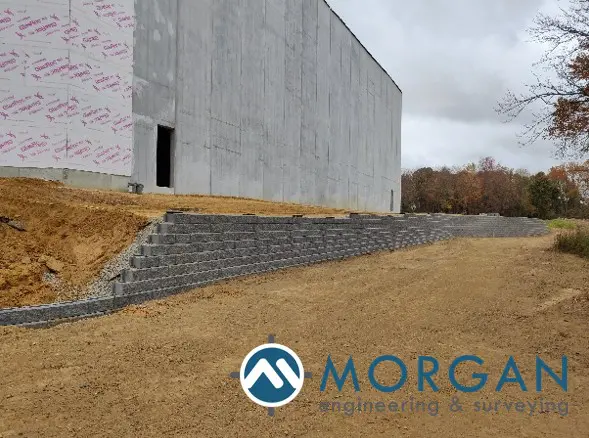
Structural Engineer Patrick Laudisi of Morgan Engineering recently completed the design and implementation of a 507-foot long by 8-foot-high retaining wall adjacent to a 141,000 square foot new warehouse construction in northern Ocean County, NJ. From base to cap, the wall includes structural components, a comprehensive drainage system, and substantial reinforcement and anchoring tools and techniques.

Morgan Engineering understands that warehouses must be designed and built to support and withstand heavy inventory, machinery, vehicle traffic, and varying weather conditions. A modern warehouse must be designed by professional structural and geotechnical engineers with the design knowledge to include reinforcement systems and drainage systems to provide a stable base and ensure the structures stand tall for lifetimes.

PHOTO: Designed to protect a warehouse from soil failure, a section of Morgan Engineering LLC designed 507-foot-long by 8-foot-high retaining wall with man atop.

Advised structural engineer Patrick Laudisi, “This was a long, windy-type structure that demanded installation precision as the site utility relies on the layout of the wall, creating the landscape that allowed the site to be developed to the extent desired. We are very happy with the outcome and we are confident its purpose has been achieved for our clients.”