(732) 270-9690
(732) 270-9690
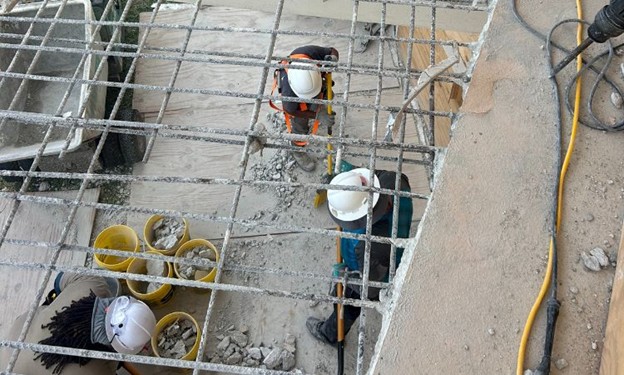
Restoration Engineers operate at the intersection of engineering, science, and history – often serving as consultants to architects, construction professionals, and property owners.
It is a specialized discipline that focuses on diagnosing, repairing, and rehabilitating existing structures and/or degraded ecosystems, returning them to a functional, safe, and/or natural state. Projects most frequently include assessing damage from age, decay, environmental disasters, or human activities.
INDUSTRY TRENDS
Advanced Materials and Self-Healing Systems
The development of self-healing concrete has emerged as a cornerstone of sustainable restoration, utilizing autogenous, biogenic, and chemical mechanisms to repair micro-cracks without human intervention (Jose, 2026). Biogenic healing, in particular, employs bacteria embedded in the concrete matrix that activate upon contact with water, producing calcium carbonate to seal fissures (Jose, 2026). Beyond concrete, the use of Fiber-Reinforced Polymers (FRPs) and shape-memory alloys has gained traction for seismic retrofitting, offering high-strength and ductile alternatives to traditional steel and timber (Tiza et al., 2024). These materials not only extend the lifespan of existing structures but also reduce the carbon footprint associated with frequent maintenance (Tiza et al., 2024).
|
Ecohydraulics and Nature-Based Solutions In the realm of water and coastal infrastructure, restoration is increasingly guided by ecohydraulics, a field that bridges hydraulic engineering with ecological outcomes (Baki, 2025). Recent studies highlight the use of nature-based solutions, such as instream boulders to create turbulent-flow habitats and vegetation to stabilize riverbanks affected by sediment mining (Baki, 2025). These interventions are designed to restore biodiversity and habitat connectivity while providing functional services like coastal wave attenuation and flood risk reduction (Baki, 2025). By mimicking natural processes, engineers can create more robust systems that align with global ecosystem restoration goals (Baki, 2025). |
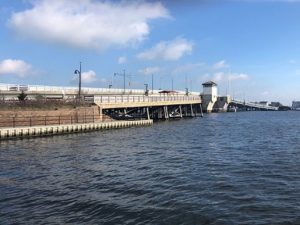
Mantoloking Bridge, NJ (County Route 528), spanning Barnegat Bay, Ocean County, NJ |
Digital Twins and AI-Driven Monitoring
Think breaking points in a structure. The integration of Digital Twin (DT) technology and Artificial Intelligence (AI) is revolutionizing structural health monitoring (SHM). A Digital Twin serves as a dynamic, data-driven replica of a physical asset, allowing for real-time monitoring and predictive maintenance (Scolamiero, 2026). By combining IoT sensors, drone imagery, and AI algorithms, engineers can detect minute structural deterioration or corrosion early in their development (Alshaikh, 2025). Recent frameworks have successfully applied these technologies to complex assets like dams and urban road networks, moving the industry toward “predictive intervention” rather than reactionary repair (Singh et al., 2026; Scolamiero, 2026).
|
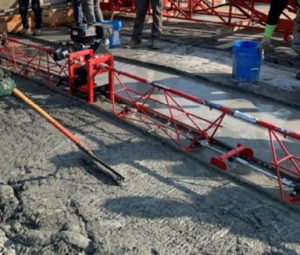
Ultra-high Performance Concrete (UHPC). Photo compliments of Rutgers CAIT |
Sustainable Cementitious Composites Recent breakthroughs in Engineered Cementitious Composites (ECC) focus on replacing traditional components with sustainable alternatives like quarry dust and supplementary cementitious materials such as fly ash and silica fume (George, 2026). These high-performance repair mortars exhibit superior ductility and crack-width control, making them ideal for rehabilitation in aggressive environmental conditions (George, 2026). Research published in 2026 underscores that these modified ECC mixes significantly reduce primary raw material extraction and environmental ecotoxicity while maintaining the mechanical integrity required for structural restoration (George, 2026). |
For decades, Morgan Engineering has been operating in restoration engineering and helping commercial and residential clients efficiently achieve pre-damage condition and prepare for the future. If you have a structural issue that may constitute restoration engineering, please contact Morgan Engineering & Surveying today as we may be able to assist.
References